
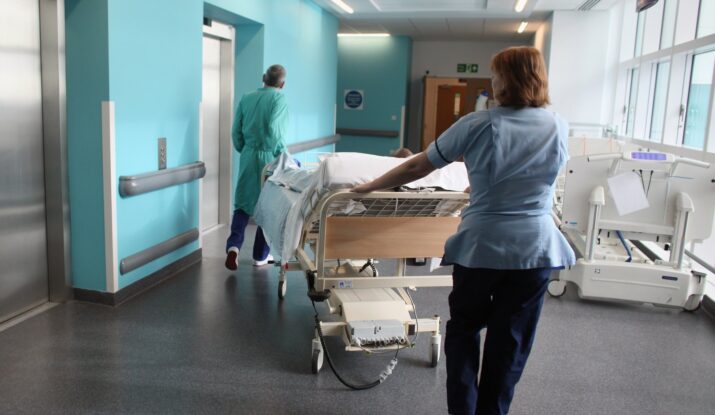
Easing the Wheels of Effective Patient Flow in Hospitals
Patient flow has become one of the defining operational challenges facing UK hospitals.
Across the NHS, acute beds are increasingly occupied not only by patients requiring active medical treatment, but also by people who are medically fit for discharge yet unable to leave
hospital safely. This phenomenon, traditionally referred to as “bed blocking” and formally described as Delayed Transfers of Care (DToC), has severe consequences for emergency departments, elective surgery, ambulance handovers and overall hospital productivity.
A delayed transfer of care occurs when a patient is clinically ready to leave hospital but remains because appropriate support outside hospital is unavailable. The causes are varied: shortages in social care packages, lack of care home placements, housing problems, inaccessible homes, and delays in community rehabilitation services. According to the Nuffield Trust, one of the most common reasons for delayed discharge is patients awaiting care packages in their own homes.
Enormous Impact
The scale of the issue is enormous. Recent reporting suggested that approximately 13,500 NHS beds per day in England were occupied by patients medically fit for discharge but unable to leave because suitable social care or community support was unavailable. That equates to roughly one in seven NHS beds. At periods of winter pressure, delayed discharge patients have occupied as many as 14% of general and acute beds.
The financial consequences are equally significant. Historic House of Commons analysis estimated delayed transfers cost the NHS £173 million annually as early as 2016–17. More recent pressures are likely substantially higher because bed-day costs have risen sharply.
Current NHS estimates often place the cost of an acute hospital bed between £350 and
£450 per day depending on speciality and acuity. Using a conservative figure of £400 per
occupied bed-day, 13,500 delayed patients would cost approximately £5.4 million every day, or almost £2 billion annually.
These delays create a cascading systems effect throughout the NHS. Emergency departments become gridlocked because admitted patients cannot move to wards. Ambulances queue outside hospitals because emergency departments lack capacity. Elective operations are cancelled because recovery beds are unavailable. Staff morale deteriorates as clinicians care for patients who no longer require hospital-level treatment but cannot be discharged safely.
Focus on Providing Hygiene Facilities at Home
One particularly under-recognised subgroup within DToC cases are patients who cannot return home because their property lacks suitable hygiene facilities. This problem disproportionately affects older adults, wheelchair users, amputees, bariatric patients and people recovering from stroke, spinal injury or major orthopaedic surgery. A patient may be medically stable, mobile with assistance, cognitively well and otherwise ready for discharge, but if they cannot safely wash, toilet or shower at home, discharge teams may deem the environment unsafe.
In many UK homes, bathrooms remain inaccessible for people with reduced mobility. Standard bathrooms may contain narrow doors, high-sided baths, steps, inadequate drainage, slippery surfaces or insufficient wheelchair turning space. Occupational therapists frequently identify inaccessible bathing facilities as a major barrier to discharge.
The problem is compounded by delays in Disabled Facilities Grants (DFGs), home adaptations and contractor availability. Permanent wetroom installations can take months due to assessment, funding approval, planning and construction timelines. Meanwhile, the patient remains in an acute bed at enormous cost to the NHS.
This is where temporary modular solutions such as the WashPod wetroom concept become highly relevant. A WashPod is a rapidly deployable disabled-access wetroom unit designed to be installed internally or externally at home. These units provide accessible showering, toileting and washing facilities without the delays associated with permanent building adaptations. For patients awaiting home modifications, they create an immediate discharge pathway.
The Wider Effect
The operational value of this approach is significant. If a patient’s sole discharge barrier is lack of accessible hygiene facilities, a temporary wetroom can convert a delayed discharge into a successful home discharge within days rather than months.
However, this is only the direct bed cost. Wider system savings include:
- Reduced ambulance queuing
- Lower elective surgery cancellations
- Faster emergency admissions flow
- Reduced deconditioning from prolonged hospital stays
- Lower risk of hospital-acquired infection
- Reduced readmissions caused by institutional decline
- Reduced readmissions from Urinary Tract Infections, poor skin health and other side effects of not bathing properly.
When these secondary savings are included, NHS England modelling frequently values freed acute capacity substantially above the simple bed-day figure.
If WashPod deployment enabled discharge for even 1,000 patients annually whose only major barrier was inaccessible hygiene facilities, the impact could be:
- 25,000 acute bed-days released
- Approximately £10 million in direct bed savings
- Thousands of additional emergency admissions accommodated
- Reduced pressure on winter escalation wards
- Improved elective surgery throughput
The Broader Patient Benefits
The broader patient benefits are equally compelling. Extended hospital stays are clinically harmful, especially for older adults. Research consistently shows that prolonged hospitalisation leads to muscle deconditioning, increased falls risk, delirium, depression and loss of independence. Many patients deteriorate physically while waiting for housing solutions rather than medical treatment.
Discharging patients home earlier with appropriate hygiene facilities preserves
independence and dignity. Patients recover better in familiar environments, sleep better, maintain social connections and avoid institutional dependency. Family carers also benefit because caring becomes safer and more manageable when proper wetroom facilities exist.
From a patient-flow perspective, modular wetroom systems align strongly with NHS strategic priorities:
- “Home First” discharge models
- Virtual ward expansion
- Intermediate care pathways
- Reduced acute length of stay
- Integrated health and social care delivery
Importantly, the approach also addresses one of the structural weaknesses in UK discharge planning: the mismatch between healthcare timelines and housing adaptation timelines. Hospitals work in days; housing adaptations often operate in months. Temporary accessible wetroom provision bridges that gap.
There is also a strong argument that NHS Integrated Care Boards (ICBs) and local authorities should jointly fund such interventions. The financial burden of delayed discharge frequently falls on hospitals, while the root cause lies in housing or social care infrastructure. Shared funding mechanisms for temporary accessibility solutions could therefore generate whole-system efficiencies.
The current DToC crisis demonstrates that patient flow is no longer purely a hospital
management issue. It is increasingly a housing, accessibility and social care issue.
Temporary solutions such as the WashPod range will not solve the entire delayed discharge crisis. However, they represent a targeted, practical intervention for a clearly identifiable patient cohort. For medically fit patients trapped in hospital solely because they cannot wash or toilet safely at home, rapid-access modular washing facilities could provide an immediate and cost-effective route back into the community.
In an NHS where every acute bed matters, solving even one avoidable discharge barrier can create benefits far beyond the individual patient. The combination of improved dignity, faster recovery, lower costs and enhanced patient flow makes temporary accessible wetroom provision a compelling example of how relatively small infrastructure interventions can unlock major system-wide efficiencies.