
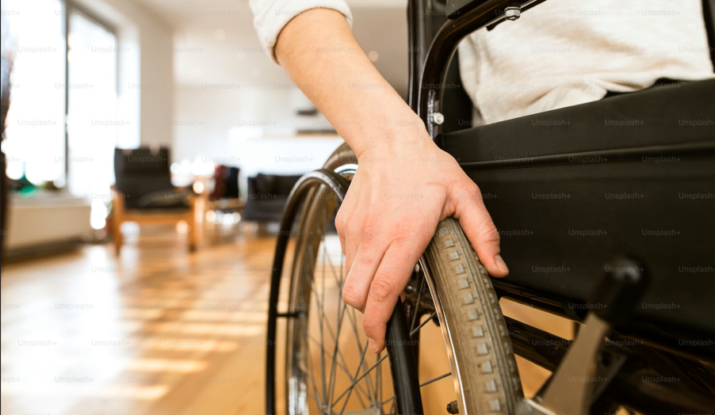
Returning Home After Spinal Cord Injury
Every May, the Spinal Cord Injury Awareness Day, supported by several associated charities, is a UK-wide initiative dedicated to increasing understanding of spinal cord injury (SCI).
Any SCI fundamentally alters the trajectory of a person’s life. Whether the injury results from
trauma (eg road traffic collision, fall, sports injury) or disease, the immediate and long-term
implications not only affect mobility and independence but also psychological well-being and
daily living. Everyone who is involved in the rehabilitation of people with spinal cord injuries
have to consider all aspects of the patient (or client’s) daily life, to help them maximise their
potential. Whether this involves working with Court Deputies or in a team with other
healthcare professionals, it’s important that the team knows the range of aids and products
available to help them achieve this.
One of the most significant challenges for individuals and their families is the transition from
hospital or rehabilitation unit back into the home environment. Most of us would agree that
the best place to recover is at home. Hospitals are inhospitable places at the best of times
and certainly, on the surface, going home may seem welcome and straightforward. But for
someone adjusting to life with a new disability, it can be one of the most complicated and
stressful periods of recovery.
For many patients, discharge marks a moment of immense emotional complexity. Hope and
relief may sit alongside anxiety, fear, and uncertainty. Patients often worry about:
- Safety at home
- Accessibility of everyday spaces
- Support for personal care needs
- Their family’s ability to cope with caregiving demands
The Healthcare teams that support them must recognise that emotional preparedness is as
critical as physical readiness. Patients benefit from tailored psychological support, clear
education about what to expect at home, and involvement in planning decisions that affect
their daily routines.
Clinical and Physiological Considerations
From a clinical perspective, individuals with an SCI often experience a range of secondary
impairments, including:
- Partial or complete paralysis below the level of injury
- Loss of sensation
- Spasticity and muscle weakness
- Bowel, bladder, or sexual dysfunction
- Autonomic dysreflexia
- Respiratory compromise
These conditions demand a comprehensive discharge assessment which needs to consider
the patient’s functional capacity, including transferring, bathing, mobility, self-care ability, and
endurance.
Specific Challenges in Adaptation- Timing and Funding
One of the greatest barriers to discharge is the timeline for home adaptations. Local
authority assessments and funding pathways can be slow, leaving patients stuck in hospital
or rehabilitation units long after they are medically ready for discharge.
Discharge planning involves coordination between a raft of professionals such as the
Healthcare providers, OTs, Social Services, Housing Departments and even building
contractors if they are necessary. This can be slow and cumbersome. Delays or
miscommunication can extend hospital stays unnecessarily, increasing costs and
psychological stress.
Home Adaptation: Practical and Environmental Factors
Returning home safely typically requires modifying the environment to support independent
living and minimise hazards. Healthcare teams work with patients, families, and often
specialist housing and social care professionals to plan and implement suitable adaptations.
There are doorways and thresholds to think of. Whether ramps or lifts are needed. The
rearrangement of obstacles and furniture along with grab rails and bars that might assist. Are
worksurfaces at accessible heights and storage easy to reach? Wheelchairs, hoists, and
what technology will assist? But, probably most significantly, how will independent washing
be facilitated, because if it isn’t, any hope of discharge can be impeded.
Bathroom and Washing Facilities
Bathrooms represent one of the most challenging areas as bathtubs or standard showers
are totally inaccessible to wheelchair users. Modifications typically considered include:
- Level-access wetrooms
- Roll-in showers
- Accessible sinks and toilets
- Non-slip flooring
- Bathrooms must not only be accessible but also allow safe transfers and personal care with
dignity which a step-in shower does not provide for someone with an SCI.
The Role of Interim Adaptations
Washing and personal hygiene is particularly important in rehabilitation as showering offers
many direct and indirect benefits. These are not only physical but medical and mental as
well. In this complex landscape, solutions that offer rapid, flexible, and effective adaptations are
invaluable. One such solution is offered by the WashPod™ range of modular accessible wetrooms that
can be installed quickly without requiring any adaptations to the property. The range has
been designed by inclusive architects to offer a wetroom with a toilet and sink that allow
wheelchair manoeuvrability and assisted care in a self-contained unit that is simply plug ‘n
play with the property’s waste and water. The larger models are also suitable for hoists,
trollies and multiple carers.
The WashPod™ can offer an interim solution while permanent adaptations or extensions are
planned or underway. Other benefits include reducing hospital or rehab stays, improving
independence in a safe way thereby supporting psychological wellbeing, offering flexibility
during someone’s transition to home life as a bridge solution and reducing the care burden
for families. But they should be integrated into a comprehensive discharge plan.
Supporting the Journey Home
Returning home after a spinal cord injury is a multifaceted challenge that involves clinical
readiness, psychological adjustment, environmental adaptation, and coordinated service
delivery. Delays in securing suitable home environments can compromise recovery, strain
healthcare resources, and negatively impact the individual’s confidence and well-being.
By integrating rapid-deployment adaptations with longer-term home modification strategies,
clinicians and care coordinators can help individuals with spinal cord injuries reclaim
autonomy and quality of life in their own homes.